Pregnancy Safe Sunscreen: Why Daily Sun Protection Matters During Pregnancy
During pregnancy, there are many changes that happen in your skin; one of the most common ones is that your skin becomes more sensitive to the sun. Hormonal changes can make skin more sensitive, which may make it more prone to the effects of ultraviolet (UV) rays, and make pigmentation issues like melasma (or “mask of pregnancy”) more likely. Pigmentation can become more noticeable and darker after exposure to the sun.
That's why wearing a pregnancy safe sunscreen every day is an important part of your skincare routine. Your skin is exposed to UVA and UVB rays when you're outside, at work, or near windows, and these rays can cause pigmentation, premature skin aging, and sun damage.
This is why it is important to select the right sunscreen during pregnancy to ensure that your skin remains well protected and has a good barrier at the same time, when it can be more fragile than normal.
Why Mineral Sunscreen for Pregnancy is Recommended
The dermatologists recommend the use of mineral-based sunscreens during pregnancy. This is because of their skin-friendly profile and how mineral sunscreens work.
They Protect Without Being Absorbed
Mineral sunscreens use Zinc Oxide and Titanium Dioxide as their active UV filters. These ingredients remain on the surface of the skin, where they reflect and scatter ultraviolet rays instead of being absorbed into the skin and bloodstream.
Because they work at the skin's surface, mineral sunscreens minimise chemical exposure and lower the risk of potential hormonal disruption.
Gentle on Sensitive Skin
Due to hormonal changes, the skin more reactive than usual during pregnancy. Redness, dryness, irritation, and sensitivity are common concerns during this time.
Mineral sunscreens work well for sensitive skin and are less likely to cause discomfort, making them a suitable choice for everyday use.
Broad-Spectrum Protection
An effective mineral sunscreen for pregnancy should protect against both UVA and UVB rays.
- UVA rays reach the deeper layers of the skin, and contribute to pigmentation and signs of premature aging.
- UVB rays are primarily responsible for sunburn.
Broad-spectrum protection helps defend your skin from both types of UV damage throughout the day.
Suitable for Daily Wear
Pregnancy is not the time to skip sunscreen. Whether you're indoors near windows or outdoors running errands, consistent protection helps reduce cumulative UV exposure.
A lightweight mineral sunscreen that feels comfortable on the skin is much easier to wear every single day.
What Makes the Best Sunscreen for Pregnancy?
Before selecting any sunscreen for sensitive skin during pregnancy, look for multiple factors beyond the SPF number. Look for a sunscreen that offers:
100% Mineral UV Filters
Formulas that contain Zinc Oxide and Titanium Dioxide, and offer broad-spectrum protection.
SPF 50 or Higher
Most dermatologists recommend using at least SPF 50 every day. If you're outdoors for longer periods or live in areas with high UV exposure, SPF 50+ offers additional protection.
Broad-Spectrum Protection
Protection against both UVA and UVB rays is essential to help reduce sun damage and pregnancy-related pigmentation.
Gentle Formula
As pregnancy can increase skin sensitivity, choosing a gentle, skin-friendly sunscreen can help keep skin comfortable.
Lightweight Texture
Daily sunscreen should feel comfortable enough to wear every morning without leaving the skin feeling heavy.
Water and Sweat Resistance
If you're spending time outdoors, a water-resistant sunscreen helps maintain protection for longer, although regular reapplication is still necessary.
Choosing the Best SPF for Pregnancy
The higher the SPF number, the more protection against UVB rays, but it does not mean you need to apply less sunscreen or less often. As a general guide, an SPF 50+ will block about 98% of the UVB rays.
In addition to SPF, check for a PA++++ rating (very high protection against UVA) Strong UVA protection is particularly important in pregnancy, because there's a strong correlation between UVA exposure and pigmentation.
SkinInspired Green Sunscreen: A Pregnancy Safe Sunscreen for Everyday Protection
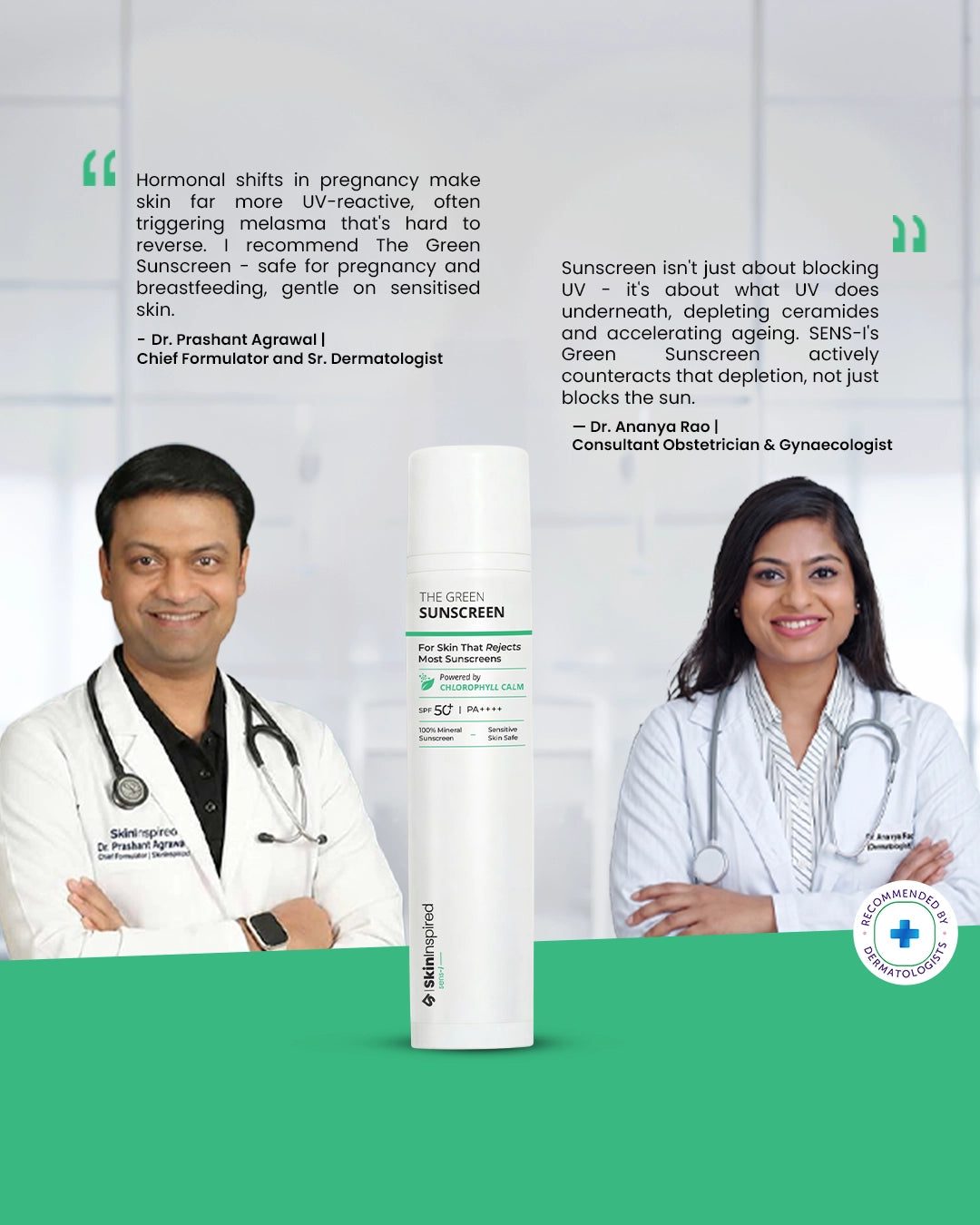
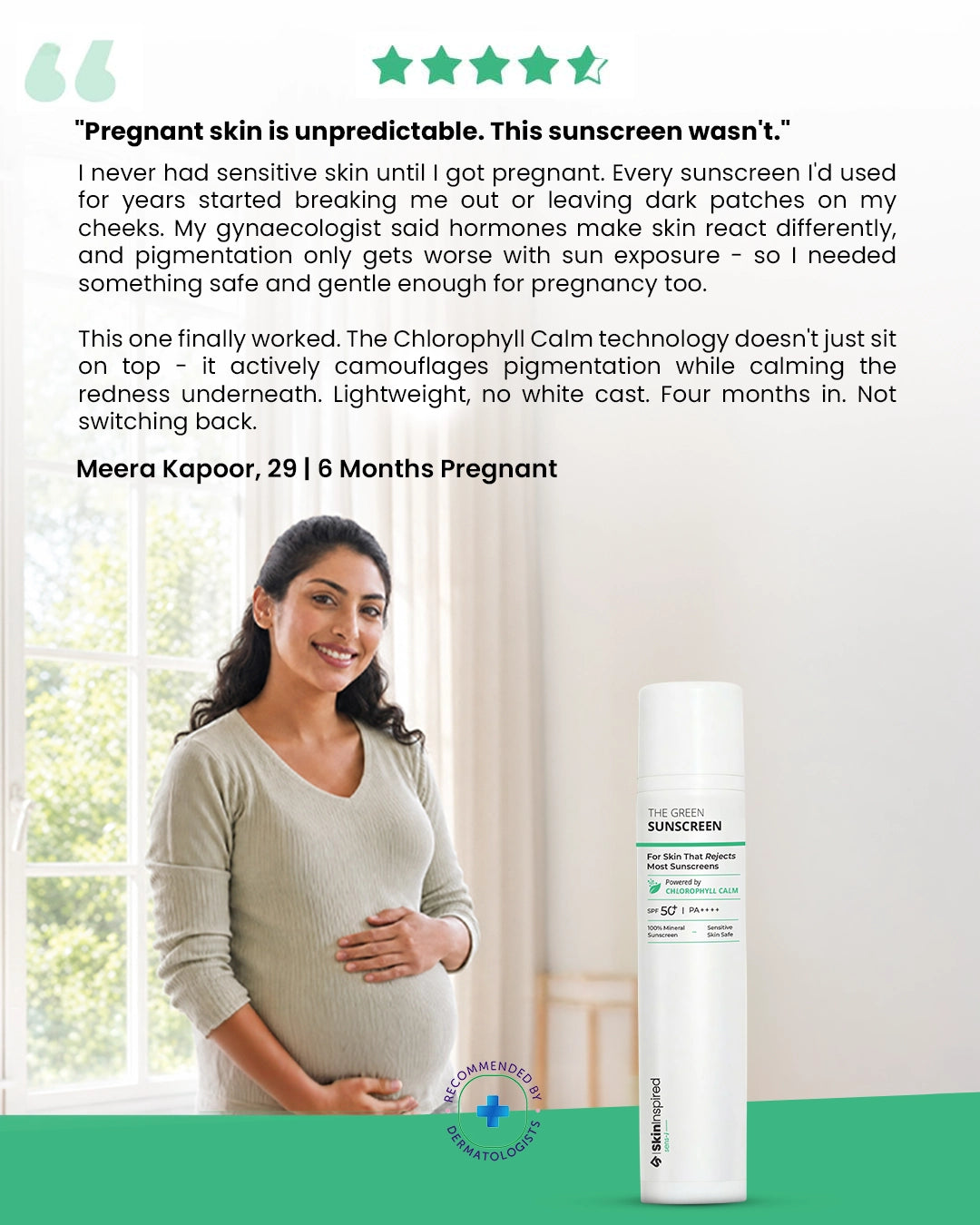
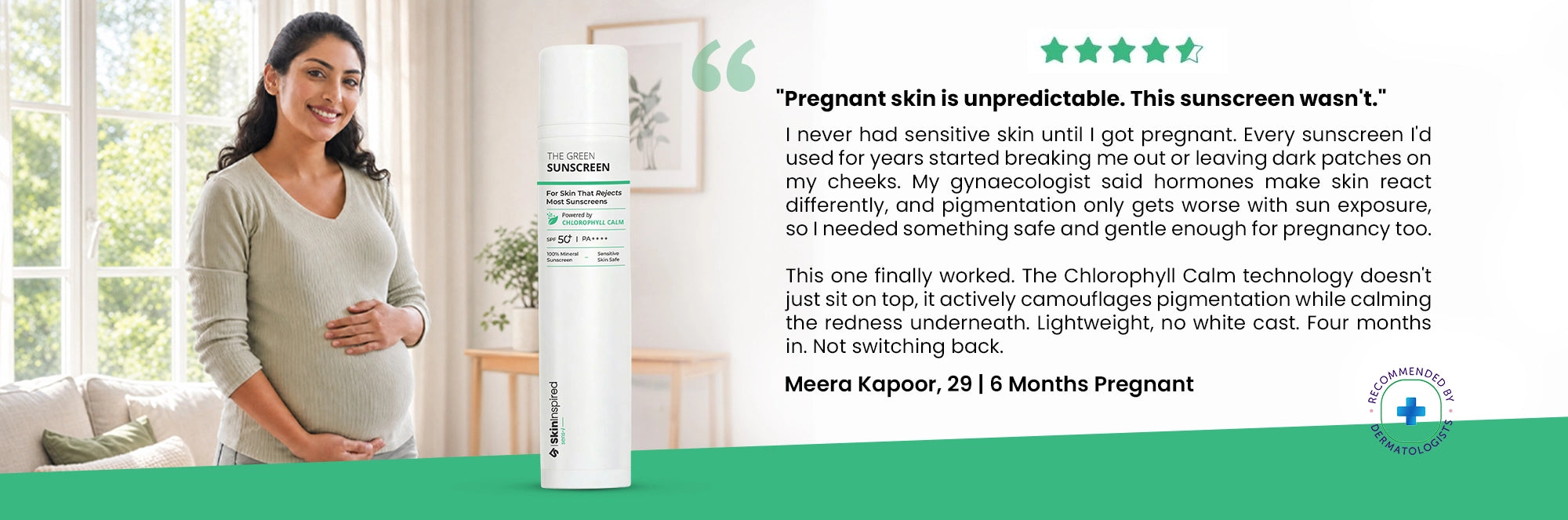
Our Green Sunscreen was specifically formulated for sensitive skin and stays gentle on the skin. The formula combines 100% mineral UV filters with skin-soothing ingredients that provide broad-spectrum SPF 50+ PA++++ protection while staying comfortable on sensitive skin.
Why it stands out
- 100% Mineral Protection with Non-Nano Zinc Oxide and Titanium Dioxide
- SPF 50+ PA++++ for high UVA and UVB protection
- Chlorophyll Calm™ Technology to help visually neutralise redness
- Suitable for Sensitive Skin, including skin that may feel more reactive during pregnancy
- Lightweight, breathable texture for comfortable daily wear
- No white cast with an elegant skin-like finish
- Water and sweat resistant for everyday use
If you are looking for a pregnancy safe sunscreen in India, SkinInspired’s Green Sunscreen is the right choice as it is designed to offer effective mineral sun protection without causing any imbalance.
Everyday Sun Protection is One of the Simplest Ways to Care for Your Skin During Pregnancy
Your skin goes through significant changes during pregnancy, and protecting it from the sun is one of the easiest ways to support its health. Daily sunscreen use can help reduce the appearance of pregnancy-related pigmentation, defend against UV damage, and keep your skin protected throughout the day.
If you're searching for a sunscreen for pregnant women, choosing a broad-spectrum mineral sunscreen with SPF 50+ is a practical choice. Our Green Sunscreen combines mineral UV protection with soothing skincare ingredients, making it a reliable everyday companion for those who want effective sun protection that's a gentle, pregnancy-friendly sunscreen.
Disclaimer: Every pregnancy is unique. If you have specific medical concerns or have been advised to avoid certain skincare ingredients, consult your obstetrician or dermatologist before introducing any new skincare product into your routine.